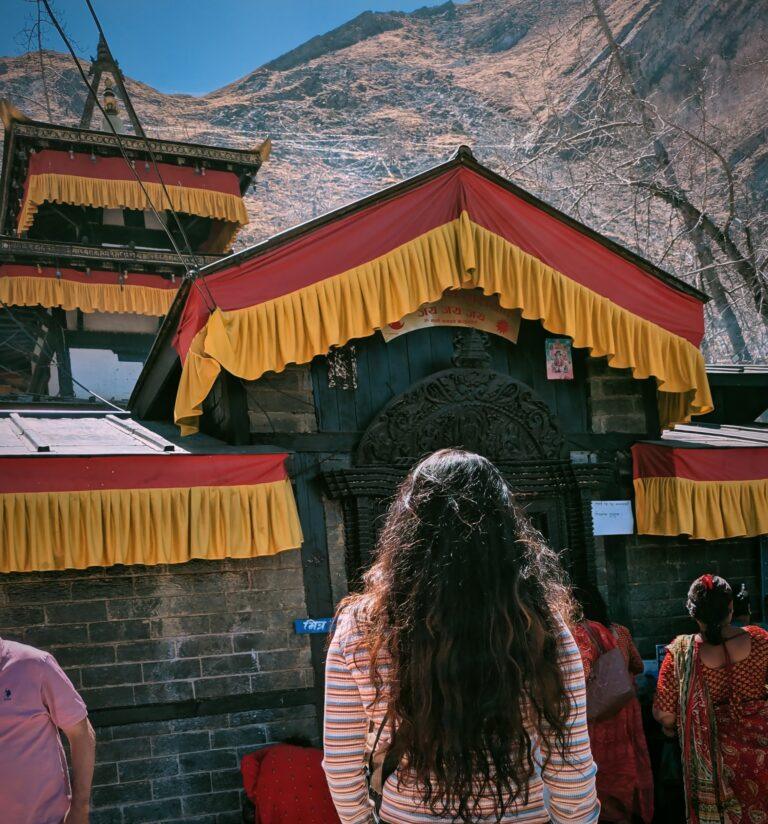

There is a distinct kind of magic that happens when you return to the Himalayas. Having been born in Nepal, the mountains were always part of my background canvas, quiet giants watching over my childhood. Now living in France,every trip back home carries a deeper meaning.
When my French husband and I decided that our visits to Nepal would no longer just be about family dinners and catching up, but about intentionally exploring the country together, a new tradition began. Last year, in 2025, we wandered through the stone-paved alleys of Ghandruk and experienced the spiritual quietude of Mustang and Muktinath. This year, in April 2026, we wanted something that would challenge us, test our breaths, and take us higher than ever before.
We set our sights on Tilicho Lake—one of the highest alpine lakes in the world, resting quietly at 4,919 meters.
From City Chaos to Mountain Silence: The Road to Manang
For this adventure, we didn’t just hire a local guide—we brought family along. My own brother, Suraj CK, who knows these trails like the back of his hand, led the way. Having him with us gave the entire journey a comforting, personal rhythm; we weren’t just tourists following a map, we were family exploring our own backyard together.
Our journey began in Kathmandu, trading the bustling, chaotic streets of the capital for a full day on the road in a jeep straight to Manang. It is a long, winding, bone-rattling ride that climbs dramatically alongside rushing rivers and sheer cliff faces. (Note for fellow travelers: many people choose to break this up with an overnight stay in Besisahar on the first day—a great option if your schedule allows for a slower pace).
By the time we finally pulled into Manang, darkness had already fallen. Since it was our very first time visiting, we stepped out into the crisp April night air with no idea what kind of landscape was hiding around us. We tucked into our hotel for the night, tired from the road and curious about what the morning would bring.
Waking Up Above the Clouds: Acclimatizing in Manang
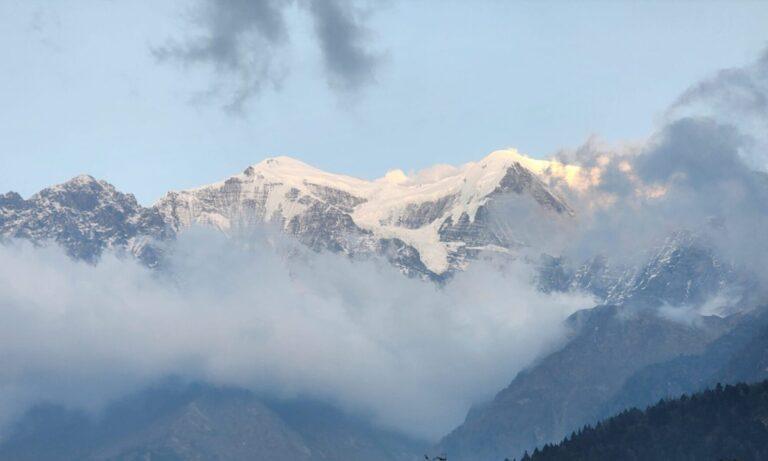
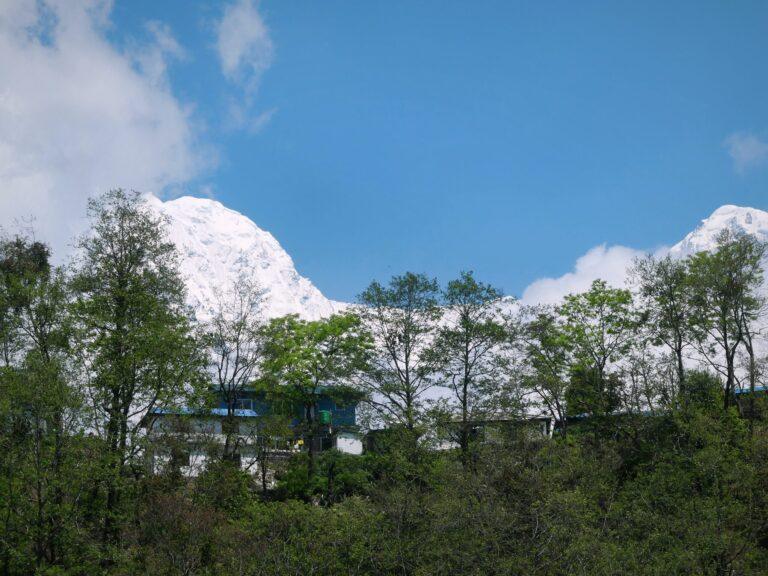
Nothing could have prepared us for opening the curtains the next morning. Right there, framed directly outside our hotel room window, stood the towering, snow-covered giants of the Annapurnas, glowing under a brilliant blue spring sky. It was genuinely breathtaking- the kind of view that makes you forget every bumpy mile of the drive the day before.
We dedicated that entire day to resting in Manang. Coming straight from living near sea level in France, we could already feel the shortness of breath at 3,519 meters. Our main focus was simply allowing our bodies to adapt to the altitude. We didn’t push ourselves or stick to a strict schedule. Instead, we soaked in the gorgeous sunny weather, wandered slowly through the traditional stone streets of the village, and just breathed in the stillness of nature. Taking that unhurried day wasn’t just smart preparation—it was a reminder that in the mountains, slowing down is part of the magic.
A Birthday Above the World: From Manang to Shri Kharka
The following morning began early. After a hearty breakfast at our hotel in Manang, we laced up our boots and officially set off on foot. Following my brother’s steady pace along the winding path, we hiked until midday, reaching Khangsar for lunch before pushing onward through dramatic, windswept valleys to Shri Kharka, where we would rest overnight.
Arriving at our teahouse felt like reaching a sanctuary—and for me, it held an extra layer of magic. I spent my birthday right there in Shri Kharka, high in the Himalayas surrounded by my husband, my brother, and my cousins.
Waking up on my birthday morning to a panoramic view that good—wrapping cold hands around a steaming cup of coffee while staring straight at towering, sun-drenched peaks—is a feeling words can barely capture. Celebrating surrounded by the people I love most in a place that grand, I honestly couldn’t have asked for a better birthday. In that quiet moment, everything felt completely gratifying. Every steep step, every ache in our muscles, and every effort it took to get there felt worth every single penny.
Walking the Edge: The "Death Zone" Before Base Camp
Leaving Shri Kharka behind, we entered what is easily the most unforgettable—and heart-pounding—stretch of the entire trek. Just before reaching Tilicho Base Camp, the trail cuts across the notorious landslide zone, locally known among trekkers as the “death zone.”
Here, the path narrows into a thin ribbon of loose gravel and shifting scree carved straight into steep, towering vertical slopes, with a dizzying drop plunging into the valley far below. With every step, you are acutely aware of the raw power of the mountains—where loose rocks can tumble from above without warning and the terrain demands your complete,unbroken focus.
Yet, it is in that exact tension between danger and beauty that the Himalayas reveal their true majesty. Surrounding that narrow ledge is a panorama so vast and staggering it leaves you speechless. Glancing across the abyss at jagged snow-dusted ridges and sweeping glacial valleys while carefully placing one foot in front of the other was humbling, thrilling,and deeply moving. Having my brother guiding us calmly through it and sharing those tense, awe-filled glances with my husband and cousins made it one of the most defining moments of our entire journey.
Seizing the Moment: Base Camp and the Push to the Lake
Emerging safely from the landslide cliffs, we kept a steady, unhurried pace and arrived at Tilicho Base Camp before noon.
Typically, trekkers spend the rest of the day resting at Base Camp and wake up before dawn the next morning to tackle the steep climb to the lake before descending back down toward Khangsar.
Standing there with my brother, my husband, and our cousins, we looked at the clock and then up at the sky. We still had the entire afternoon ahead of us, and the April mountain weather was unusually clear and cooperative. Knowing how quickly conditions can turn at high altitude, we decided to take the risk and push all the way to Tilicho Lake that very same day.
The final ascent was steep, demanding, and tested every ounce of stamina we had left. Step by slow step, in the thin air near 5,000 meters, we finally crested the ridge.
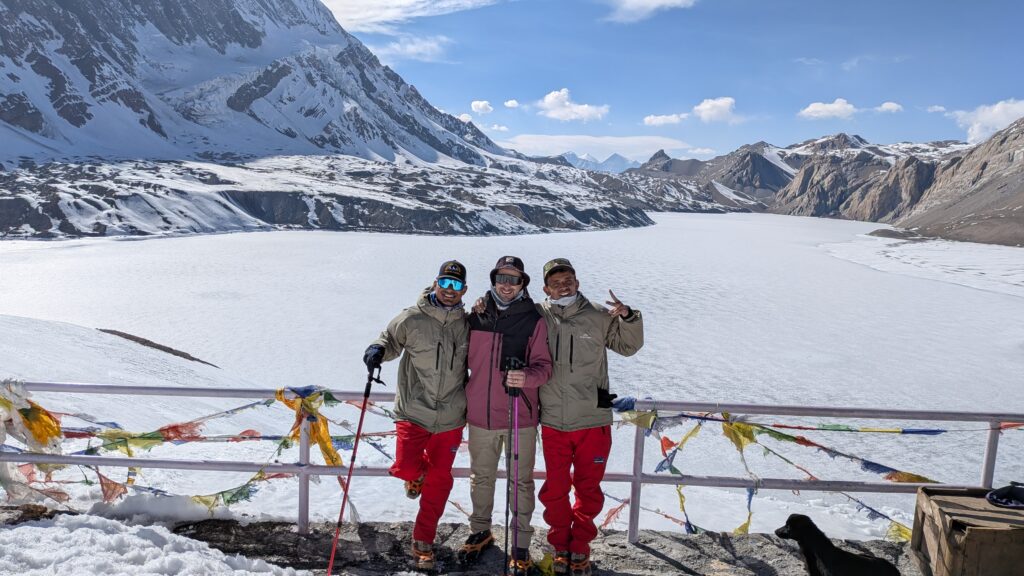
When we looked out across Tilicho Lake, we were met with a surprise: because it was still April, the lake was completely frozen. Instead of the famous bright turquoise waters we had seen in summer photos, a vast, silent expanse of snow and ice stretched out beneath the towering frozen wall of Tilicho Peak. It wasn’t what we expected, yet standing there in the crisp high-altitude stillness—sharing that surreal moment together as a family—there was something deeply raw and unforgettable about seeing it locked in winter’s grip.
Dal Bhat, Morning Views, and the Road Ahead
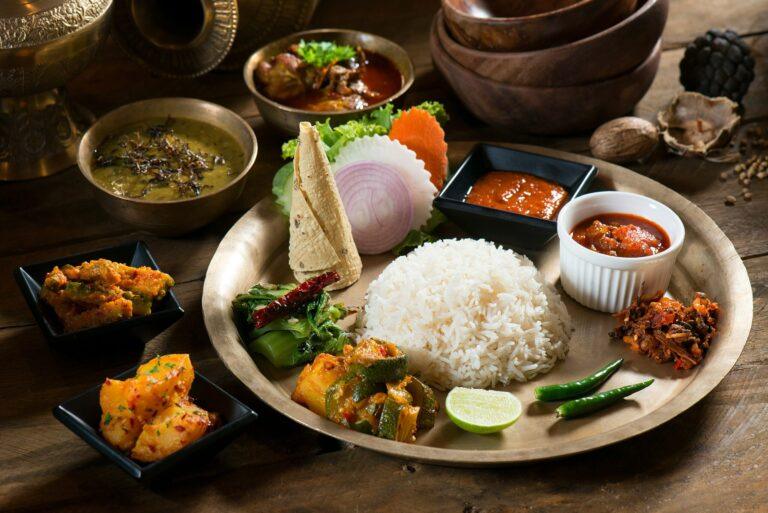
With the afternoon light fading and the chill setting in, we made our way back down to stay overnight at the Base Camp hotel. The thin air did catch up with us slightly—my husband experienced mild symptoms of altitude sickness, which made us deeply grateful that we had come prepared with altitude medication. With rest, hydration, and medicine, he recovered well, and that evening we celebrated our climb the best way possible in Nepal: gathered around warm,comforting plates of dal bhat—traditional lentils, rice, and spiced vegetables that tasted like pure gold after a day at nearly 5,000 meters.
And once again, the mountains rewarded us. Waking up at Base Camp the next morning to another magnificent, sunlit panorama felt like the ultimate farewell gift from the high Himalayas before we began our descent.
As we climbed back down toward Khangsar—passing back across those dramatic landslide slopes one last time—we reached the trail that branches off in another direction, leading up toward the legendary Thorong La Pass. Because we were short on days, we had to turn back toward home rather than continue onward. Still, standing at that crossroads with my husband, my brother, and my cousins, we knew one thing for certain: Thorong La is officially at the top of our list for next time.
Travel Notes for Your Own Tilicho Journey:
Go With a Trusted Tourist Guide: Navigating shifting weather windows, acclimatization schedules, and tricky terrain like the landslide zone is infinitely smoother and safer with an experienced local guide. If you’re planning a trip to Nepal and want someone knowledgeable, calm, and reliable by your side, you can check out my brother’s tourist guide profile right here: Suraj CK
Take It Slow: High altitude is no joke. Coming from France, we felt the shortness of breath early on. Walking slowly,taking your time, and never rushing your pace makes all the difference.
Eat Well & Order Garlic Soup: Keeping your energy up is essential at high altitude. Alongside hearty plates of dal bhat, hot garlic soup became a strict must-have at every single meal for us—it warms you up instantly and is a classic Himalayan remedy for helping your body cope with the elevation.
Pack Mindfully: Strike the right balance—don’t carry too much weight, as every extra kilo feels twice as heavy above 4,000 meters, but make sure you pack enough warm layers for freezing mornings and evenings.
Carry Altitude Medicine: Even with proper acclimatization, altitude affects everyone differently. Packing altitude sickness medication is essential—it came in very handy when my husband felt mild symptoms near Base Camp.
Pacing & Weather Windows: If you have extra days, consider breaking up the Kathmandu-to-Manang drive with a night in Besisahar, and always take a full acclimatization day in Manang. If you reach Base Camp early on a clear day, talk with your guide about pushing up to the lake that afternoon—and if you go in April, prepare for a stunning frozen wonderland.
Add Your Heading Text Here
Looking back on the journey, the biggest lesson the Himalayas taught us is patience. High altitude is no joke; coming from France, we felt the thin air from the very beginning, and choosing to take things slow—walking at a gentle rhythm,listening to our bodies, nourishing ourselves well, and never skipping our bowl of hot garlic soup—turned a grueling climb into an unforgettable joy. Sharing that adventure with my husband, my brother, and my cousins made it even more meaningful. Nepal isn’t a place you visit just once. For me, every trail is a deeper homecoming; for my husband, it is an ever-expanding adventure. Until we return for Thorong La, the mountains will be waiting.